
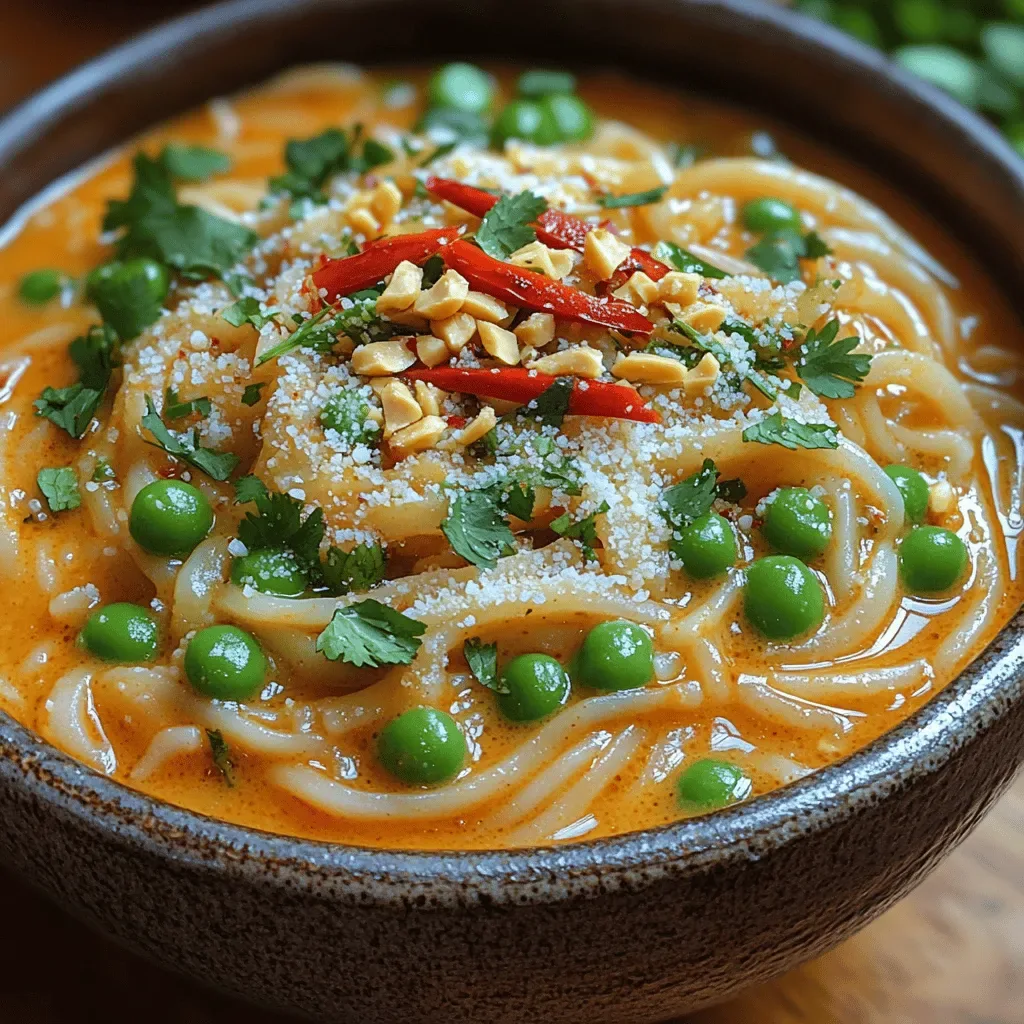
Imagine a bowl where silky noodles meet a velvety, fiery coconut curry that tingles the palate and comforts the soul. This Spicy Thai Coconut Curry Noodles recipe brings that exact moment to your kitchen, turning a simple weeknight dinner into a mini‑vacation to Bangkok.
What makes it truly special is the balance of heat from red curry paste, sweetness from palm sugar, and the creamy richness of coconut milk—all woven together with fresh herbs that lift the dish instantly.
Fans of bold Asian flavors, noodle lovers, and anyone craving a quick yet exotic meal will adore this dish. It shines as a hearty lunch, a satisfying dinner, or even a festive brunch when paired with a crisp salad.
The cooking process is straightforward: cook the noodles, whip up a fragrant curry sauce, quickly stir‑fry your protein and vegetables, then toss everything together for a glossy, aromatic finish.
Why You'll Love This Recipe
Bold, Layered Flavors: The marriage of red curry, lime, and fresh herbs creates a depth that keeps each bite exciting and unforgettable.
Fast Weeknight Solution: With a total time under 45 minutes, you can serve restaurant‑quality Thai comfort without the hassle.
Customizable Protein: Whether you prefer chicken, shrimp, tofu, or pork, the sauce clings perfectly, making it easy to adapt to dietary needs.
Vibrant Presentation: Bright greens, orange peppers, and a splash of lime give the bowl a visual pop that’s as pleasing as the taste.
Ingredients
The magic of this dish lives in its balance of creamy, spicy, and fresh components. The noodles provide a neutral canvas, while coconut milk and red curry paste deliver richness and heat. Aromatics like garlic and ginger lay the foundation, and the lime‑fish‑sugar trio brightens the sauce. Fresh vegetables add crunch, and herbs finish the bowl with a fragrant lift.
Main Ingredients
- 200 g (7 oz) rice noodles or flat egg noodles
- 300 g (10 oz) boneless chicken thighs, thinly sliced (or firm tofu for veg)
- 1 cup mixed vegetables (red bell pepper, carrot, snap peas)
Curry Sauce
- 2 tablespoons Thai red curry paste
- 400 ml (1 ½ cups) coconut milk (full‑fat)
- 1 tablespoon fish sauce (or soy sauce for veg)
- 1 tablespoon palm sugar or brown sugar
- Juice of 1 lime (about 2 tablespoons)
Seasonings & Garnish
- 2 cloves garlic, minced
- 1 inch fresh ginger, grated
- 1 tablespoon vegetable oil
- ½ cup fresh Thai basil leaves, torn
- ¼ cup cilantro, chopped
- 1 teaspoon crushed red pepper flakes (optional)
- 2 tablespoons roasted peanuts, chopped (optional)
Together these ingredients create a harmony of textures and flavors. The coconut milk mellows the heat of the curry paste while the lime adds a refreshing acidity. Sugar balances the saltiness of fish sauce, and the fresh herbs provide a bright finish that lifts the whole bowl. Each component is chosen to complement the others, resulting in a cohesive, restaurant‑quality noodle dish you can master at home.
Step-by-Step Instructions
Preparing the Noodles
Bring a large pot of salted water to a rolling boil. Add the noodles and cook according to package instructions—usually 4‑5 minutes for rice noodles—until just tender. Drain, rinse under cold water to stop cooking, and toss with a drizzle of oil to keep them from sticking.
Making the Curry Sauce
In a medium saucepan over medium heat, whisk together the red curry paste and vegetable oil for 30 seconds until fragrant. Slowly pour in the coconut milk, stirring to dissolve the paste completely. Add fish sauce, palm sugar, and lime juice; bring to a gentle simmer and let the sauce thicken for 4‑5 minutes, stirring occasionally.
Cooking the Protein & Veggies
- Heat the wok. Preheat a large wok or skillet over medium‑high heat for 2 minutes. Add a splash of oil and swirl to coat the surface.
- Sear the chicken. Add the sliced chicken in a single layer. Let it sear without moving for 2‑3 minutes until golden, then stir‑fry for another 2 minutes until cooked through. Remove and set aside.
- Sauté aromatics. In the same wok, add minced garlic and grated ginger. Cook for 30 seconds, watching carefully to avoid burning; the aromatics should turn golden and release their fragrance.
- Stir‑fry vegetables. Toss in the bell pepper, carrot, and snap peas. Stir‑fry for 2‑3 minutes until they are crisp‑tender and still brightly colored.
- Combine everything. Return the chicken to the wok, pour the simmering curry sauce over the mixture, and add the cooked noodles. Toss everything together for 1‑2 minutes, allowing the noodles to absorb the sauce and become glossy.
Finishing Touches
Turn off the heat and immediately stir in the torn basil, chopped cilantro, and crushed red‑pepper flakes if you like extra heat. Transfer the noodles to serving bowls, sprinkle with roasted peanuts, and serve with lime wedges on the side. The dish is best enjoyed hot, while the sauce clings to every strand.
Tips & Tricks
Perfecting the Recipe
Pre‑soak noodles. Soak rice noodles in warm water for 10‑12 minutes before boiling; this reduces cooking time and prevents over‑softening.
Control the heat. Keep the curry sauce at a gentle simmer; a rolling boil can cause the coconut milk to separate and become grainy.
Season in layers. Add a pinch of salt after the sauce thickens to bring out hidden flavors without over‑salting.
Rest before serving. Let the finished bowl sit for 2 minutes; this lets the sauce settle and the flavors meld.
Flavor Enhancements
Finish the dish with a splash of extra lime juice for brightness, a drizzle of toasted sesame oil for nuttiness, and a handful of fresh mint leaves for an unexpected aromatic lift.
Common Mistakes to Avoid
Avoid over‑cooking the noodles—they should stay slightly al dente to hold up to the sauce. Also, never add the curry paste directly to boiling coconut milk; temper it in hot oil first to release its full flavor without clumping.
Pro Tips
Use a wok. The high, sloping sides of a wok allow for rapid, even heat distribution, perfect for stir‑frying.
Fresh herbs at the end. Add basil and cilantro off the heat to preserve their volatile oils and color.
Make a double batch of sauce. Extra sauce can be frozen and used later, saving time on busy nights.
Adjust heat with coconut cream. Stir in a spoonful of coconut cream at the end for extra silkiness if you prefer a richer mouthfeel.
Variations
Ingredient Swaps
Swap chicken for shrimp, thin‑sliced pork, or firm tofu for a vegetarian twist. Replace bell pepper with broccoli florets or baby corn for a different crunch. If you’re out of coconut milk, use a mix of coconut cream and low‑fat milk, though the richness will be slightly reduced.
Dietary Adjustments
For gluten‑free diners, ensure the fish sauce and curry paste are labeled gluten‑free, or substitute tamari. To keep it dairy‑free, stick with coconut milk only—no butter needed. For a low‑carb version, replace noodles with shirataki noodles or spiralized zucchini.
Serving Suggestions
Serve the noodles alongside jasmine rice or cauliflower rice to soak up extra sauce. A simple cucumber‑mint salad provides a cooling contrast. For a festive spread, pair with Thai spring rolls, pickled vegetables, and a chilled glass of Riesling.
Storage Info
Leftover Storage
Allow the noodles and sauce to cool to room temperature, then transfer to airtight containers. Refrigerate for up to 3 days. For longer keeping, portion into freezer‑safe bags, remove excess air, and freeze for up to 2 months. Thaw overnight in the fridge before reheating.
Reheating Instructions
Reheat in a skillet over medium heat, adding a splash of coconut milk or broth to restore moisture; stir until hot and glossy, about 4‑5 minutes. In the oven, cover the dish with foil and bake at 350°F for 12‑15 minutes. Microwaving works in a pinch—heat in 30‑second bursts, stirring between intervals, and add a drizzle of sauce.
Frequently Asked Questions
This Spicy Thai Coconut Curry Noodles recipe delivers bold, balanced flavors with a straightforward technique that anyone can master. From selecting fresh herbs to mastering the perfect simmer, every step is designed for success. Feel free to tweak proteins, vegetables, or heat levels to match your palate—cooking is your personal playground. Dive in, enjoy the aroma, and savor each vibrant bite!


